




Knowledge Sharing
INDUSTRIAL ROOFTOP SOLAR INSTALLATION 2024 – Detailed Guide, Benefits and Costs
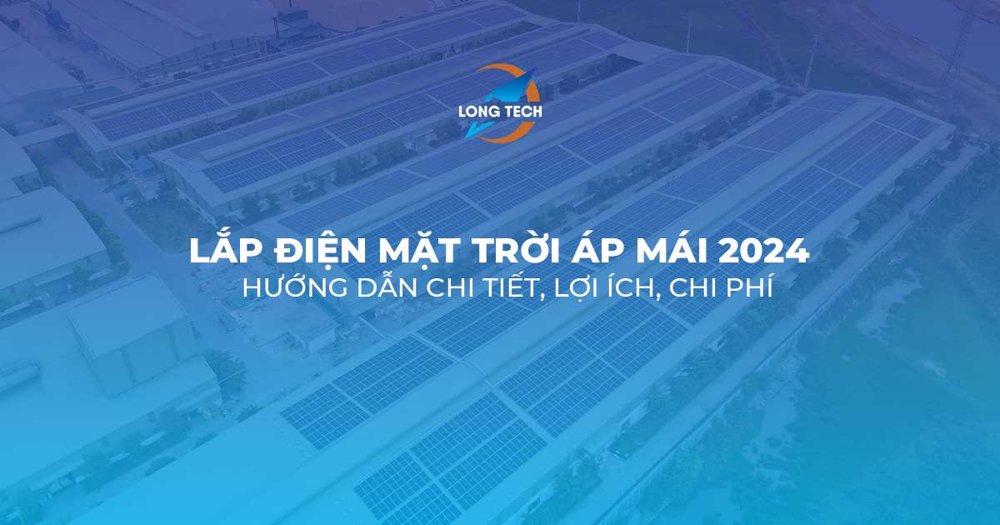
As renewable energy is increasingly prioritized and developing strongly, adopting industrial rooftop solar installation is not only a trend but an essential need. The shift to clean energy helps businesses reduce their environmental impact and also brings significant economic benefits through lower energy costs.
I. Why install industrial rooftop solar in 2024
1. The shift to green energy is an inevitable trend
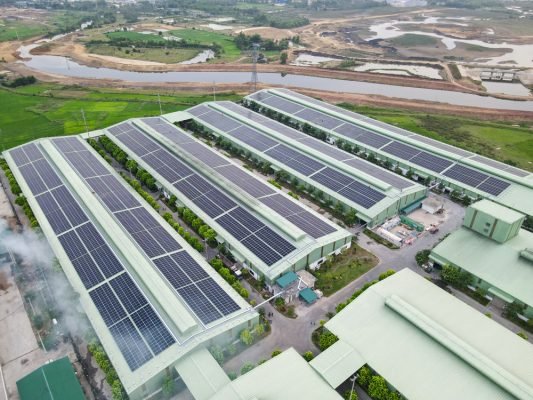
Based on government moves at home and abroad, it is clear that rooftop solar installation has become, and will continue to be, an inevitable trend for businesses' future development.
2. Benefits of installing solar power
Electricity cost savings
- Electricity costs 10-20% less than EVN
- Savings of up to 300 million VND per MW per year
Green enterprise
- Preparing ESG reports
- Enhancing corporate image and competitiveness
Green certificates
- Helps achieve green certifications such as I-REC, LOTUS, LEED and Green Mark
Environmental protection
- Reduces emissions by 1,347 tonnes of CO2 per year per MW, equivalent to 61,847 trees
- Lowers rooftop temperature by about 5°C
See also: Installing 1 MWp of solar power – what environmental benefits does it bring to businesses?
II. Costs of installing industrial rooftop solar in 2024
Basically, a rooftop solar system has the following components in its price list, with cost allocated as follows:
| Component | Recommended brand | Cost |
|---|---|---|
| Solar panels (PV modules) | Jinko Solar | Accounts for about 39% of total cost |
| Grid-tie inverter | Huawei | Accounts for about 11% of total cost |
| Auxiliary materials (junction boxes, DC and AC electrical cabinets, and other accessories) | Viet Hung Power | Accounts for about 30% of total cost |
| EPC services (survey, construction and installation, operation and maintenance) | Viet Hung Power | Accounts for about 10% of total cost |
| Mounting structure frame | Viet Hung Power | Accounts for about 10% of total cost. Corrugated metal roofs have the lowest cost, followed by flat roofs and tile roofs. |
III. Two installation models for industrial rooftop solar
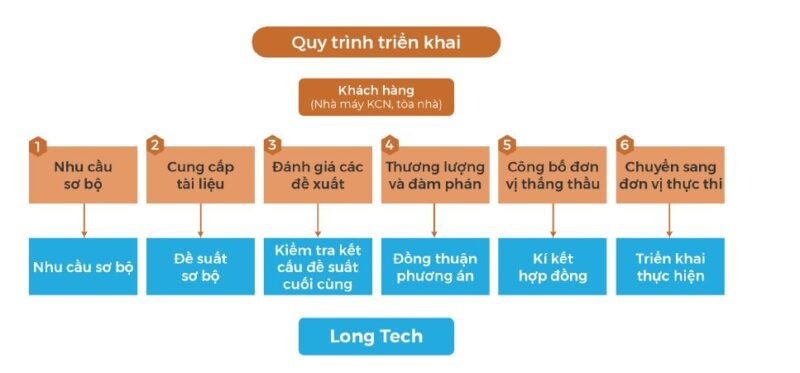
1. CAPEX model
CAPEX stands for Capital Expenditure, meaning capital investment cost. Under this model, the customer pays for all investment costs to deploy the solar power system. Once the system is in operation, the customer directly owns and manages it.
Solar installation process under the CAPEX model:
2. ESCO model (Energy Service Company)
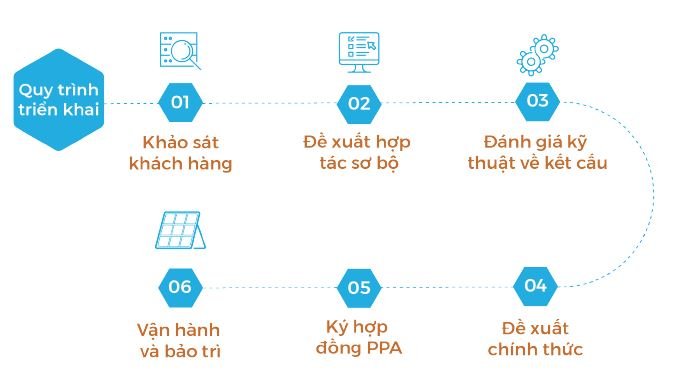
ESCO is a solar investment model with no upfront capital outlay, designed for businesses with high electricity consumption that want to install solar power and further reduce their annual electricity costs. The model is built on a three-way partnership benefiting the business, a financial partner and the EPC general contractor. The business only pays the financial fund according to its actual electricity bills, and the electricity price is discounted below the EVN tariff. When the contract ends, the solar power system may become the property of the business.
Solar installation process under the ESCO model:
Comparison of two solar installation models: ESCO and CAPEX
| CAPEX | ESCO | |
|---|---|---|
| Initial investment cost | The business bears the full cost itself | Paid by the financial fund |
| Design and layout | EPC | Financial fund & EPC carry out |
| Ownership | Business owns | Does not own |
| Permits | EPC is responsible | Financial fund & EPC are responsible |
| Electricity price | Based on initial investment calculations | The proposed discount will “always” be applied relative to EVN's electricity tariff at that time |
| Operation and maintenance (O&M) | Business and/or O&M provider | Financial fund is responsible |
| Green energy certificates | EPC supports the business in registering for I-REC renewable energy certificates | The financial fund supports providing Renewable Energy Certificates (I-REC) to the business |
| Equipment warranty | Business | Financial fund |
Viet Hung Power accompanies factories on their green transformation journey
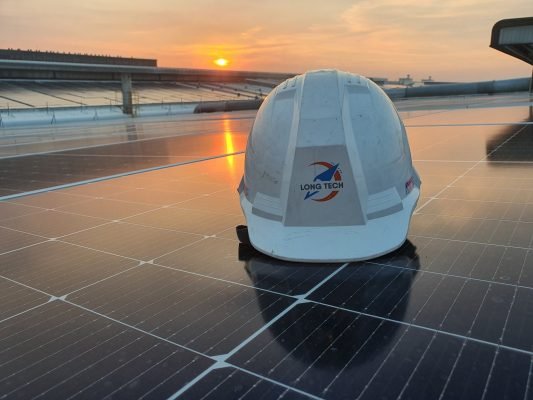
Viet Hung Power is a quality pioneer in the solar power project general contracting sector, recognized by investors at home and abroad. EPC services at Viet Hung Power are built on applying internationally recognized management systems such as ISO 9001:2015, ISO 45001:2018 and ISO 17025, together with power-industry standards such as IEC, TCVN and TUV. Viet Hung Power also has a team of highly qualified, experienced engineers, ensuring project schedules and performance. In addition, Viet Hung Power is one of the strategic distribution partners of Jinko Solar, Huawei and Leader Cable – leading solar equipment suppliers worldwide – and is committed to delivering your solar project with the highest-quality products.
Viet Hung Power has successfully delivered many solar power projects of large and small scale across the country. Viet Hung Power's projects always ensure quality, schedule and safety, and bring high economic efficiency to customers.
Viet Hung Power is proud to accompany factories on their green transformation journey, contributing to environmental protection and building a sustainable future.